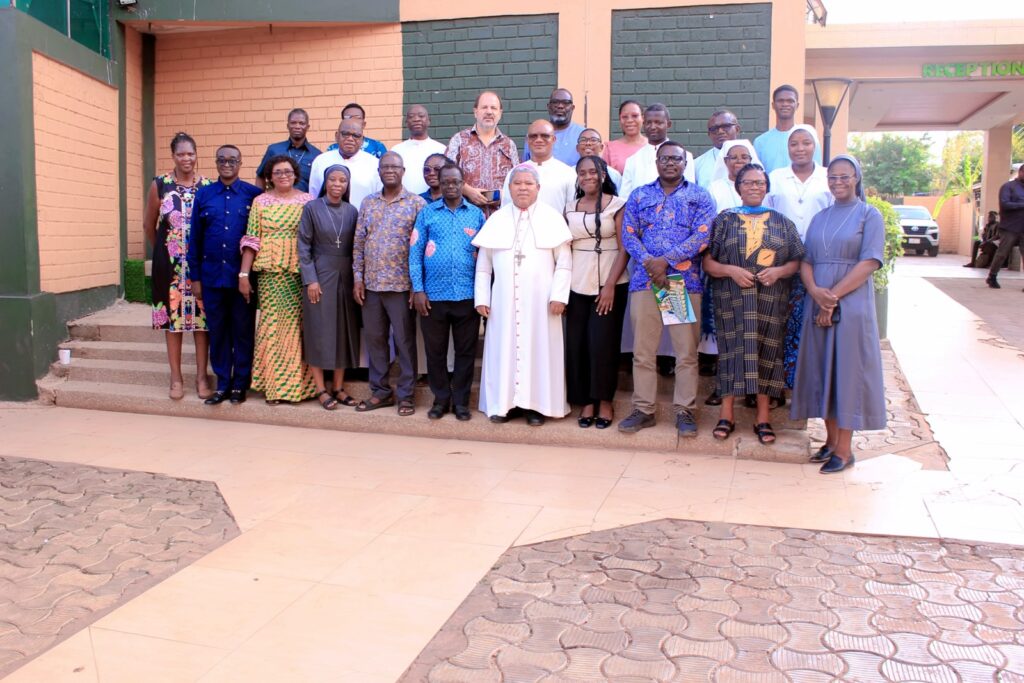
TEPPIA Convenes Stakeholders to Develop Training Manual on the Social Teachings of the Catholic Church
TEPPIA successfully organised a two day stakeholder workshop from 29th to 30th April 2026 aimed at developing a comprehensive training manual on the Social Teachings of the Catholic Church (CST).
The Church’s work in integral human development is deeply rooted in Catholic Social Teaching, which continues to guide efforts in promoting human dignity, justice, peace, and sustainable development. TEPPIA’s mandate and constitutional framework similarly draw inspiration from these teachings. Historically, the Church’s social teachings have played a central role in shaping generations of youth and lay leaders, many of whom have gone on to become committed social activists and ethical leaders in society. However, over time, awareness and engagement with these teachings have declined, particularly among young people and sections of the lay faithful.
Recognising this gap, the Bishops of the Tamale Ecclesiastical Province have expressed a collective commitment to revitalize training and awareness of Catholic Social Teaching. In response, TEPPIA has initiated a structured process to develop a sustainable training manual that will support formation at all levels within the Church and beyond.
As part of the preparatory process, TEPPIA engaged key stakeholders, including the Arrupe Jesuit Institute (AJI) and Sir Fosuaba A. Mensah Banahene, whose valuable insights helped shape the direction of the programme. Building on these consultations, nine priority thematic areas were identified, and expert resource persons were commissioned to develop concept papers to inform the training manual.
The workshop brought together a broad representation of stakeholders, including participants from the Major Seminary, Religious Congregations, Catechists’ Association, Provincial Women’s Council, Provincial Youth Council, Catholic Education Unit and TEPPCON Executives, as well as development partners such as Jacob Christian Adams Stiftung, Konrad Adenauer Stiftung, and Caritas Ghana.
During the workshop, the nine resource persons presented draft concept papers covering key themes such as: General Overview of Catholic Social Teaching; Human Rights with emphasis on children and the girl child; Security, Justice and Peace; Character and Ethical Formation of the Youth; Leadership; Family and Social Life; the Church and Politics; Care for Creation; and Living Solidarity and support for the poor and vulnerable.
Participants actively contributed to the discussions, providing critical feedback and practical recommendations to strengthen the content. In addition to plenary sessions, participants were organised into working groups to further review the presentations, identify gaps, and ensure that the content is relevant, practical, and adaptable to diverse audiences.
The workshop concluded with clear resolutions and a roadmap for the next phase of work. The process will culminate in the production of two key documents: a Training Manual and a Compendium, which will serve as a reference resource.
Importantly, the final training manual will be designed for practical use across multiple settings, including schools, Church institutions/groups, and community-based groups, ensuring that the Church’s Social Teaching is effectively integrated into formation, leadership, and development initiatives.
TEPPIA remains committed to advancing the vision of the Bishops by equipping individuals and institutions with the knowledge and tools needed to promote justice, peace, and human dignity. This initiative marks a significant step toward renewing the Church’s social mission and strengthening its impact in Northern Ghana and beyond.
TEPPIA expresses its sincere appreciation to its partners, Eyerund Stiftung and the Muenster Diocese, Germany, for their continued support in advancing the Church’s mission of promoting justice, peace, and human dignity through formation and capacity building.